Grief feels like it's everywhere. It’s a topic that now comes up in our favorite podcasts and in conversations with friends. This collective experience has brought loss out of the shadows, but that doesn't make it any easier to handle. The reality of coping with loss is deeply personal and often overwhelming. While grief statistics can show us how widespread it is, they don't capture the physical and mental toll it takes on each of us. Understanding what you're going through is the first step toward healing, and we're here to help you do just that.
Indeed, it is a different world. Specifically, it is different in that everyone is learning that this uncomfortable feeling, this anxiety and depression at lack of control, has name –– and it is grief.
A recent study, done before this pandemic by Amerispeak and WebMD, found that 57% of Americans are grieving the loss of someone close to them over the last three years. That means every other person you see is grieving –– because grief never really goes away.
And that was what our world looked like in the summer of 2019. In the spring of 2020, the coronavirus is increasing that number –– bringing loss to many more of our doorsteps. And here's the thing:
Everyone’s personal grief journey will be different.
It will be different for every person, pet, or deep connection you lose.
- There is no end date.
- There is no specific stage you should be at.
All there is is how you feel, how you grieve as time passes, and how you cope. And in the coping phase, friends and family can be incredibly helpful. Of course, they can accidentally be incredibly unhelpful as well.
That’s why studies like this are so important.
This study, which surveyed more than 1,000 Americans, reveals how those who have recently grieved the death of a child, spouse, a close friend, a close family member, or a pet, have felt about that loss in relation to how their friends and family supported them (or didn't).
This is how they remember feeling, how they coped, and what tactics from friends, family, and others most helped or hurt their grieving process.
For all of us in this moment in history together, these insights can help us understand what we can do to help those we love with some of life's most difficult experiences and emotions, even from afar.
You're Not Alone in Your Grief
The Surprising Statistics on Recent Loss
The old adage that you don’t know what it’s like in someone’s shoes unless you’ve walked a mile in them is true. More than 57% of Americans reported experiencing a major loss over the last three years.
In all, 32% experienced the loss of a family member or close friend, 20% experienced the death of a pet, 3% expired the loss of a spouse or partner, and 2% experienced the loss of a child.
Within that, 45% of the deaths were anticipated, 45% were not anticipated, and another 8% were anticipated as the result of a violent circumstance.
Truly, the majority of Americans are dealing with some sort of pain and complicated grief at all times. Keep that in mind as you move through your day –– in traffic, at the grocery store, on your evening jog. A little kindness can go a long way to help make someone’s day a little bit brighter.
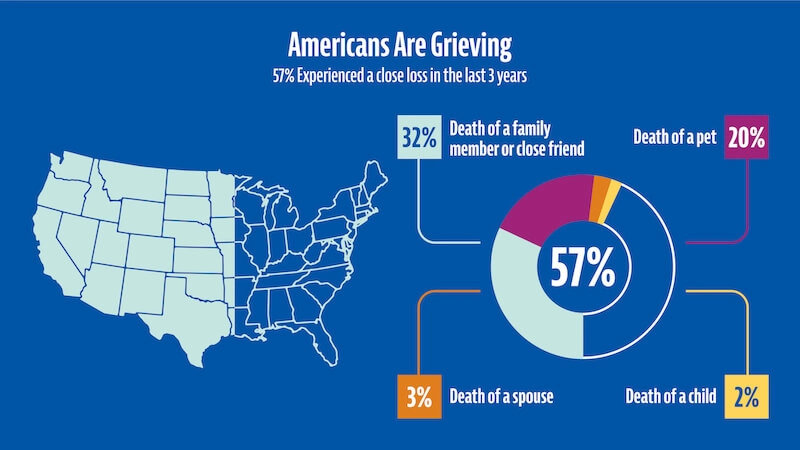
What the Grief Statistics Show
- 32% of people have experienced the death of a family member or close friend
- 20% have experienced the death of a pet
- 3% death of spouse
- 2% death of child
Understanding the Nature of Grief
Grief is More Than Just Sadness
When we think of grief, our minds often jump straight to sadness. But it’s so much more complex than that. Grief is a full-body experience that can show up in ways you might not expect—from a surprising sense of relief, especially if a loved one was suffering, to a feeling of numbness or even a physical ache in your chest. It’s also not reserved just for the death of a person. The deep pain of loss can come from losing a beloved pet, the end of a relationship, or a major life change. Grief is a natural response to losing someone or something you love, and it looks different for everyone. There’s no right or wrong way to feel.
A Reflection of Deep Love
As painful as it is, grief is really just a reflection of deep love. It’s the emotional toll we pay for having someone so special in our lives. The idea of “moving on” can feel impossible, and that’s because it’s not about forgetting. It’s about learning to live with the loss and finding ways to carry their memory forward as a cherished part of who you are. This journey can help you find new meaning and focus on what’s most important. Creating a tangible connection, like a memorial diamond, can be a beautiful way to honor that love and keep their story alive. You don’t simply ‘get over’ a loss of this magnitude; you learn to integrate it into your life, letting it shape you in profound ways.
Does Grief Ever Really End?
While there is no preset or determined grief timeline because everyone’s grief journey is different, survey respondents said that the most intense emotions and grieving were in the first year after the loss.
That makes sense. Life changes, and every single event is a new experience without that loved one: the holidays, the birthdays, the anniversaries.
But grief doesn’t end there.
Plenty of Americans report they are still intensely grieving at the 3 year mark.
This is especially true for those who have lost a child or partner (38% are still intensely grieving).
Again, this makes sense. Every life event and milestone, any good news or any bad news, all of it is a moment their loved one isn’t experiencing with them.
For friends and families of those grieving, be cognizant of this.
- Reach out –– over text, email, a call, anything (but maybe not social, and you’ll see why soon!) –– and let them know you are thinking of them.
- Talk about their loved one. Say their name.
- Recall specific details about them –– especially if it was something only you and that person shared. Learning new information about what someone you love said, or thoughts, or did can be healing.
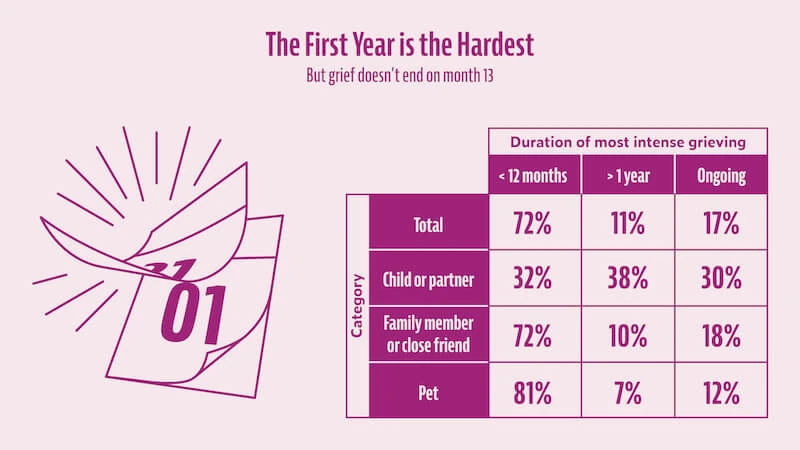
What the Data Shows About Grief's Timeline
Most intense grieving (total):
- Less than 12 months 71%
- More than 1 year 11%
- Still intensely grieving 17%
Child/partner most intense grieving:
- Less than 12 months 32%
- More than 1 year 38%
- Still intensely grieving 30%
Family/close friend most intense grieving:
- Less than 12 months 72%
- More than 1 year 10%
- Still intensely grieving 17%
Pet most intense grieving:
- Less than 12 months 81%
- More than 1 year 7%
- Still intensely grieving 12%
Debunking the Myth of a Grief Timeline
One of the biggest pressures we face when grieving is the unspoken expectation that we should be “over it” by a certain point. But there is no official timeline for grief. While many people find the first year to be the most intense, plenty of Americans report they are still grieving deeply three years later, especially those who have lost a child or partner. Your journey is your own, and it’s okay if it doesn't fit into a neat box. The most important thing is to give yourself the grace and space to feel what you need to feel, for as long as you need to feel it. Understanding the process of grieving can help you be kinder to yourself along the way.
Healing is About Integration, Not Forgetting
Healing from a loss isn't about forgetting the person or pet you loved so dearly. It’s about learning how to carry their memory with you as you move forward. You don't simply "get over" a profound loss; you learn to live with it, integrating their story into your own. This process of coping with grief means accepting that the pain is a natural response to deep love. Instead of trying to erase the memories, we can find ways to honor them, allowing them to become a beautiful and permanent part of who we are. This is how we keep their legacy alive—not by moving on from them, but by moving forward with them.
Can Grief Physically Hurt You?
There are real, physical symptoms and side effects that come with intense grief: 65% of Americans those going through intense grieving experience some sort of physical ailment, or a combination of multiple ones.
You can see below how it breaks down overall. As a friend or family member trying to help, understand that these physical ailments are real, and side effects of mental health symptoms associated with their intense grief.
Be there for them. Sit with them. Do exactly what you would to aide anyone else experiencing these pains. Whatever you do, do not dismiss them.
This is an incredibly important, and painful, part of life. Potentially even help them find health care providers that may be able to help lessen the physical pain and as they better sort through the mental hurdles.

The Data Behind Grief and Physical Health
- 39% experience fatigue
- 32% change of appetite
- 25% headaches
- 20% aches and pain
- 15% stomachaches
- 12% heart palpitations
- 5% new diagnosis or worsening disease, cancer, blood pressure
- Other 10%
The Connection Between Grief and Mental Health
These physical ailments are likely due to mental symptoms associated with the pain of the loss of a close connection.
As a friend or family member, keep an eye out for anything on the suicidal thought spectrum. It isn’t unheard of for those experience deep grief to go in that direction. If that happens, seek help.
The other symptoms are serious, as well, and require your empathy, your ear if they want to talk, and likely just your silence as you sit together in the suck of the loss.

What the Numbers Say About Grief and Mental Health
- 83% experienced sadness
- 42% experienced depression
- 31% inability to sleep / sleep disturbances
- 29% anger
- 19% anxiety, including PTSD
- 5% suicidal thoughts
- Other 2%
When to Seek Professional Support
Grief is an intensely personal experience, and there's no instruction manual for it. But if your grief consistently feels too heavy to carry, doesn't seem to lessen with time, or is accompanied by a deep sense of hopelessness, it might be time to talk with a professional. A therapist or grief counselor can offer a safe, confidential space to work through your emotions and find healthy ways to cope. Reaching out for that kind of support isn't a sign of weakness; it's a courageous step toward healing and honoring both your loved one and your own well-being.
It is especially critical to get help right away if you feel completely overwhelmed, are in a crisis, or are having any thoughts of harming yourself. Your safety is the absolute priority, and there are dedicated people available around the clock who want to support you through this moment. You are not a burden, and you don’t have to go through this alone. Please, don't hesitate to use the resources below if you need immediate help. Taking that step is the bravest thing you can do.
Resources for Immediate Help
- 988 Suicide & Crisis Lifeline: Call or text 988 anytime in the U.S. and Canada to connect with a trained crisis counselor for free, confidential support.
- Crisis Text Line: Text HOME to 741741 from anywhere in the U.S. to connect with a volunteer crisis counselor.
- The Trevor Project: For LGBTQ young people in crisis, call 1-866-488-7386 or text START to 678-678.
- NAMI (National Alliance on Mental Illness): A great resource for finding local mental health services, support groups, and educational programs.
Beyond professional support, remember the power of your community. As difficult as it may feel, try not to isolate yourself. Leaning on friends and family who care about you can provide comfort and a much-needed sense of connection. You might also consider joining a support group, either online or in person. Sharing your story and listening to others who have experienced a similar loss can be incredibly validating and can remind you that you are not walking this path alone.
Are You Stuck in a Grief Loop?
Many folks experiencing intense grief and mourning get stuck in a loop of negative thoughts and feedback. Isolation, self-blame, and a feeling of a lack of purpose tend to increase the closer a connection is to you.
These negative loops are recognized by those who are in them, given that so many continue to grieve intensely three years later. But, they are incredibly difficult cycles to break.
As a friend or family member, one of the best things you can do is to listen intensely, even if it gets repetitive, and kindly point out where the thinking might not be accurate. If it is accurate, let it sit. Let it be. The situation sucks. That’s all you have to say.
Sometimes new experiences in which those grieving can look forward to something that has to do with their passed loved one can help.
For instance, memorial diamonds –– which take 7-11 months to create, through which loved ones get updates about the process throughout –– or legacy project –– which people create and share to keep the memory of their loved one and their legacy alive –– can be extremely helpful to break negative cycles.
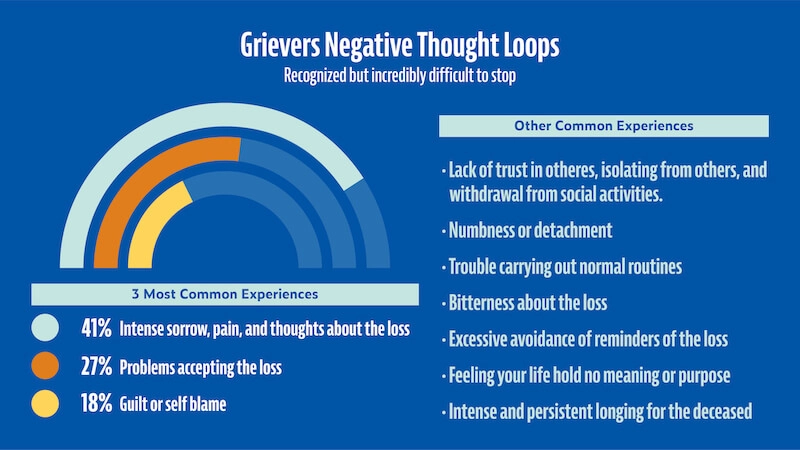
Understanding the Feedback Loop with Data
- 41% intense sorrow, pain, thoughts and feelings of loss
- 27% problems accepting the loss
- 18% guilt or self blame
- 16% lack of trust in others, isolating from others and withdrawal from social actives
- 22% numbness or detachment
- 20% trouble carrying out normal routines
- 15% bitterness about the loss
- 17% excessive avoidance of reminders of the loss
- 12% feeling your life hold no meaning or purpose
- 15% intense and persistent lingering for the deceased
- Other 8%
Common Models for Understanding Grief
To better understand your own feelings, it can be helpful to look at some common frameworks for grief. These aren't rulebooks or timelines you need to follow. Instead, think of them as maps that show a few of the possible routes your journey might take. Your path will be your own, but knowing the terrain can make the experience feel a little less isolating. Whether you see your grief as a series of stages or a pattern of waves, the goal is simply to give a name to what you're feeling and know that you aren't the first person to feel this way.
The Five Stages of Grief
You’ve probably heard of the “five stages of grief”: denial, anger, bargaining, depression, and acceptance. While these are all common feelings after a loss, it’s important to know that they are not a neat, linear checklist. As grief experts often explain, it's much more of a roller coaster than a straight line. You might experience intense anger one day and a sense of acceptance the next, only to feel denial creep back in. You may skip some stages entirely or experience them in a completely different order. This model is useful for identifying your emotions, but don’t feel pressured to fit your experience into these specific boxes.
Understanding Grief's "Waves"
Another way to think about grief is to picture it as waves in the ocean. In the beginning, the waves are huge, powerful, and they come one right after another, leaving you feeling like you can barely catch your breath. Over time, the waves don’t necessarily disappear, but they might come less frequently, and their intensity might lessen. There will still be days when a big wave of grief unexpectedly knocks you over, but there will also be longer periods of calm in between. This model helps you remember that it's okay to allow painful feelings to come and go without judgment.
Different Types of Grief Experiences
Just as there are different models for how grief feels, there are also different types of grief based on the circumstances of the loss. Sometimes, the nature of the loss itself can make the grieving process more complex. Recognizing your specific experience can be a powerful step toward understanding your needs and finding the right kind of support. Your feelings are valid, no matter what shape your grief takes or what kind of loss you've experienced.
Anticipatory and Disenfranchised Grief
Anticipatory grief happens before a loss occurs, often during a loved one's long illness. It’s a strange and difficult space to be in, mourning someone who is still with you. Disenfranchised grief happens when your loss isn't openly acknowledged or socially supported. This can happen after a miscarriage, the end of a non-marital relationship, or when losing a pet. Because society doesn't always recognize the depth of these bonds, you might feel like you have to hide your pain, which only makes it harder to process.
Complicated or Prolonged Grief
For most people, the intense, all-consuming pain of grief softens over time. But for some, that acute pain remains and makes it incredibly difficult to resume daily life. This is often called complicated or prolonged grief. If you feel stuck in your grief, and the pain isn't getting better months or years after the loss, it might be a sign that you need extra support. It’s not a sign of weakness; it’s a sign that the loss was profound, and seeking help from a grief counselor or therapist can make a significant difference.
Why Connection is Key When Coping with Loss
Almost a full 50% of those grieving intensely say spending more time with friends and family is extremely helpful. Loss seems to bring along a power to form a family of all types to offer support, whether it be friends, neighbors, or co-workers.
Yes, there may be periods of isolation, or outbursts of anger, but by-and-large, those grieving want to spend time around those who knew and loved their loved one, too.
Music, faith, books, exercise, and creative expression rank high as coping mechanisms as well.
A good idea is to use your time together to listen to music, practice a religious or spiritual ritual, recommended books or talk about the advice in them, exercise together, or create something together –– like a painting, or a dance, or a journal practice.
Read about this deep father-son relationship and get a glimpse of the power of vulnerability in strengthening family ties.

What the Data Says About Social Support
- 49% spent more time w/ friends and fam
- 35% listened to / played music
- 26% sought out faith / spiritual practices
- 16% read books
- 14% increased exercise
- 16% spent time on creative expression, writing, art, etc.
- 9% traveled
- 5% saw a mental health professional, a grief counselor or sought out professional help sessions
- 5% attended in-person or online support groups / grief support forums / discussions
- 9% other
Practical Ways to Help a Grieving Friend
Platitudes are known to not be the best way to make someone feel better. But it turns out, they are far from the worst. Trying to cheer someone up through effort like a group activity, sharing memories, or even just showing effort in general through your presence is the best way to help.
The worst way? Telling someone they should have already moved on, or offering unsolicited advice.
Also, do what you can to keep your own stories of loss tucked in close, at least for a little while. For many, they can help. But for many, they can make the situation worse. Gauge the person you love before going down that path.
As the support system, you are an incredibly important part of a new daily routine or daily activities, and your friend or loved one's future well-being.
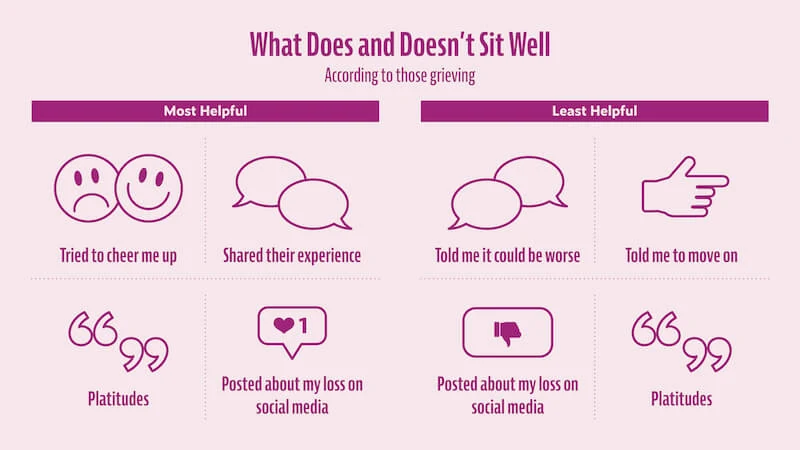
What Grieving People Say They Need
The Most Helpful:
- 51% tried to cheer me up
- 44% shared their own experience
- 29% platitudes
- 12% when they posted about my loss on their social
- 9% unsolicited advice
- 9% told me I needed need to move on / seek closure
- 7% it could be worse
The Least Helpful:
- 22% told me it could be worse
- 19% told me I needed to move on / seek closure
- 11% when they posted about my loss on their social
- 10% platitudes
- 6% shared their own experience with loss
- 6% tried to cheer me up
Finding a New Normal After Loss
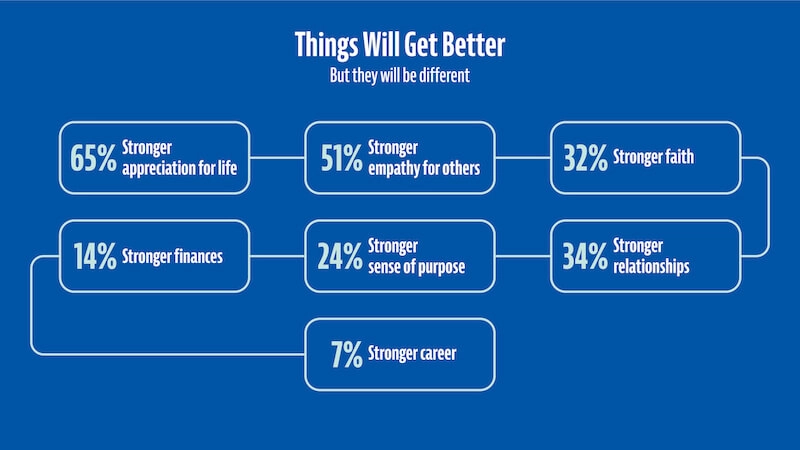
More than half of residents said that 3 years after the loss, they are more appreciative of life (65%) and have more empathy for others (51%).
Relationships, faith, purpose, finances, and career can all take hits throughout those three years, but for many, they come full circle and begin to feel even stronger than before.
Time doesn’t heal all wounds. But it does make for new normals, and that comes with both the bitter and with the sweet.
What the Data Shows About Life After Loss
- 65% stronger appreciation of life
- 51% stronger empathy for others
- 32% stronger relationships
- 34% stronger faith
- 24% stronger sense of purpose
- 14% stronger finances
- 7% stronger career
Actionable Self-Care Strategies for Grieving
While support from others is vital, taking care of yourself is the foundation for navigating your grief. Self-care isn't about grand, expensive gestures; it's about the small, consistent actions you take to tend to your mind and body when they need it most. It’s about giving yourself the same grace and compassion you would offer a friend. These strategies are practical steps you can take to support yourself through the process, acknowledging that your needs will change from one day to the next. The goal isn't to erase the pain, but to build resilience and find moments of peace within it.
Be Kind to Yourself
First and foremost, give yourself permission to feel whatever you’re feeling without judgment. Grief is physically and emotionally exhausting. Your body is processing a major trauma, so basic needs like rest, nutrition, and hydration are more important than ever. It’s okay if you don’t have the energy to do much. It’s okay to have days where you feel like you’re moving backward. Instead of criticizing yourself for not “grieving correctly”—because there’s no such thing—practice self-compassion. Treat yourself with kindness, allow yourself to rest when you’re tired, and remember that you are doing the best you can in an incredibly difficult situation.
Create Meaningful Rituals to Honor Their Memory
Rituals can provide a sense of structure and a tangible way to connect with your loved one’s memory. This doesn’t have to be complicated. It could be as simple as lighting a candle for them every evening, playing their favorite album, or starting a journal practice to write down your thoughts. Some people find comfort in creating a small memorial space in their home with photos and cherished items. For others, a more involved project can be healing. Creating a memorial diamond from their ashes, for example, transforms the process into a journey of creation, offering something beautiful to look forward to and a way to carry their memory with you always.
Plan for Grief Triggers
Anniversaries, holidays, birthdays, and even certain songs or places can bring a sudden, intense wave of grief. These triggers are a normal part of the process, but they can feel overwhelming if they catch you off guard. Try to anticipate them when you can. Think about what might be a difficult day and make a plan. This could mean scheduling a quiet day for yourself, arranging to spend time with a supportive friend or family member, or planning an activity that specifically honors your loved one. Having a plan doesn't eliminate the sadness, but it can help you feel more prepared and less alone when those feelings arise.
It's Okay to Take a Break and Feel Joy
It might feel strange or even wrong to laugh or experience happiness while you are grieving, but it is not a betrayal of your loved one. Allowing yourself moments of joy is essential for your healing. It’s okay to watch a funny movie, enjoy a meal with friends, or get lost in a hobby. These moments of relief don’t diminish your loss; they provide the emotional fuel you need to continue processing it. Think of it as part of honoring the life they lived and the happiness they would want for you. Sharing positive memories and expressing gratitude for the time you had together is a beautiful way to find light in the darkness.
A Note on Social Media and Grief
Social media can be a double-edged sword when you're grieving. On one hand, it can be a source of incredible community and support. On the other, it can expose you to insensitive comments or a constant stream of other people's happy moments, which can feel jarring. Be mindful of how you use it. It’s perfectly fine to take a break, mute accounts, or curate your feed to protect your emotional well-being. If you do choose to engage, consider using private groups for support or sharing memories on your own terms, when you feel ready. Your online space should be a place of comfort, not added stress.
Your Path Forward with Grief
Coping with loss doesn’t happen in grief stages like so many people might think. Instead, it happens over time, as each holiday goes by, as a new normal sets in.
Friends and family, though, have an incredibly important role to play. They are the best coping strategy those grieving intensely have, and how they respond to the grieving, what they say, or what they don’t, all matter.
It doesn’t have to be awkward. It just has to feel right, honest, and helpful.
Challenging Common Grief Myths
Myth: You Need to "Be Strong"
One of the most common things people hear after a loss is to “be strong.” This well-meaning advice often translates to bottling up your feelings and putting on a brave face for others. But this expectation to be stoic can make you feel incredibly isolated, as if your natural, messy emotions are an inconvenience or a sign of weakness. Grief isn’t something to be conquered with strength; it’s a process to be moved through with honesty and self-compassion. Suppressing your feelings doesn’t make them disappear; it only delays the healing process and can make the journey more difficult.
True strength in the face of loss looks a lot like vulnerability. It’s having the courage to admit you’re not okay, to cry when you need to, and to lean on others for support. Your grief is a direct reflection of the love you shared, and feeling the depth of that loss is not a weakness—it’s a testament to a profound connection. Allowing yourself to fully express your emotions is one of the most powerful things you can do to honor your loved one and your own healing. Strength isn’t about being unbreakable; it’s about allowing yourself to feel everything.
Frequently Asked Questions
How long is grief supposed to last? There is no official timeline for grief, and anyone who suggests there is simply doesn't understand the process. While the data shows that the first year after a loss is often the most intense for many people, it's completely normal for deep grief to continue for years, especially after losing a partner, child, or other close connection. The goal isn't to reach an end date but to give yourself the grace to feel what you need to feel, for as long as you need to feel it.
Is it normal for grief to cause physical pain? Yes, it is incredibly common for grief to show up as physical symptoms. The emotional toll of a major loss puts immense stress on your body, which can result in everything from fatigue and headaches to changes in appetite and even heart palpitations. These physical pains are not just "in your head"; they are a real part of the grieving process for the majority of people. Acknowledging this connection is an important step in being kind to your body as it heals.
I want to help a friend, but I'm scared of saying the wrong thing. What's actually helpful? The most helpful thing you can do is simply show up and be present. Your friend or family member likely just wants to know they aren't alone. According to people who are grieving, efforts to cheer them up and share positive memories are far more helpful than platitudes or unsolicited advice. The worst things you can do are tell them they need to "move on" or that "it could be worse." Just listen, be there, and let them know you're thinking of them.
I feel guilty when I have a good day or laugh. Is that normal? Feeling a pang of guilt during a moment of joy is a very common experience when you're grieving. It can feel like a betrayal of your loved one, but it absolutely is not. Allowing yourself to experience happiness is a necessary part of your healing. These moments of relief don't diminish your love or your loss; instead, they give you the emotional strength you need to continue processing your grief. Think of it as honoring the life they lived and the happiness they would have wanted for you.
What's the difference between "moving on" and healing? This is such an important distinction. The idea of "moving on" implies leaving your loved one in the past and forgetting, which feels impossible and wrong. Healing is something different. It's about learning how to integrate the loss into your life and carry your loved one's memory forward with you. You don't get over a profound loss; you learn to live with it, allowing their story and your love for them to become a permanent and beautiful part of who you are.
Key Takeaways
- Your grief is valid, and it has no timeline: It's normal for grief to show up physically and mentally, so give yourself permission to feel what you need to feel without pressure to "get over it" by a certain date.
- Lean on your community for support: The data is clear that spending time with friends and family is one of the most effective ways to cope, so don't be afraid to reach out and let people in when you're ready.
- Focus on integration, not just moving on: Healing doesn't mean forgetting your loved one; it means finding meaningful ways to carry their memory with you, allowing their story to become a permanent and cherished part of your own.


