Types of Diamonds: Understanding Your Options
Science & Tech
17 min read
Article Category:Science & Tech
Every diamond begins as simple carbon, transformed by immense heat and pressure into the world’s hardest gemstone. It’s a process of pure alchemy. While this once happened only deep within the Earth over billions of years, science now allows us to replicate this wonder in a lab. This innovation has opened the door to creating diamonds with profound personal meaning, like a memorial diamond from ashes. To fully appreciate this beautiful journey of transformation, it helps to understand the fundamentals. We’ll explore the science, the history, and the different types of diamonds to help you create a tribute that is as unique as the life it represents.
Diamonds are the hardest mineral on Earth. Made from pure carbon, heat, and pressure, diamonds are a rare and beautiful resource. From fine jewelry to industrial applications, diamonds are a priceless wonder of the natural world.
While diamonds may seem simple to the naked eye, there are entire fields of study dedicated to this precious stone. In fact, there’s so much information available about diamonds, it can be difficult to know where to start! This simple, easy-to-navigate guide will give you all the information you need when considering your next diamond purchase.
The History of Diamonds
Diamonds are a jewelry staple. Whether you know them as a girl’s best friend or the focal point of an engagement ring, diamonds have long been associated with love, promises, and eternal bonds.
Although diamonds are seemingly abundant, diamond creation is a lengthy process. It takes between 1 billion and 3.3 billion years for a diamond to form beneath the Earth’s mantle, miles beneath the surface. Eterneva’s lab-grown diamonds don’t take quite as long—our seven-step process takes place over the course of seven to 10 months.
Because diamonds take so long to grow, they’re considered a rare and precious stone. Diamonds were first discovered in India during the 4th Century BC. Eventually, diamonds made their way to Europe, where they were exclusively worn by the wealthy.
The late 1800s marked a shift in the diamond industry when these rare minerals were discovered in the Cape Colony of South Africa. Moving forward, South Africa became a leading producer in the diamond industry.
Although diamonds are more accessible in the present day, they still carry special meanings as uplifting and shining tokens of affection.
The Modern Diamond Story
While diamonds have been cherished for centuries, their role as the ultimate symbol of commitment is a more recent development. The idea was cemented in popular culture after the famous slogan, "A Diamond Is Forever," was introduced in 1947. This campaign forever linked the stone's enduring nature with the promise of eternal love, making it the go-to choice for engagement rings. Today, that concept of "forever" is evolving. A diamond can represent more than a romantic promise; it can be a brilliant celebration of a life well-lived and a tangible connection to a loved one's memory. Creating a memorial diamond is a modern way to honor that forever bond, transforming a personal story into a beautiful, timeless heirloom that keeps a loved one's legacy sparkling.
Global Diamond Sources
The journey of a mined diamond is a global one. These precious stones are unearthed deep within the Earth in specific regions, with major diamond-producing countries including Australia, Botswana, Russia, and South Africa. From these mines, they travel across the world to be cut, polished, and eventually set into jewelry. In contrast, lab-grown diamonds offer a different, more personal origin story. Instead of being extracted from the earth, they are grown in a highly controlled environment that replicates the natural process. This modern approach provides complete transparency, allowing for a diamond created with purpose and a clear, traceable history, which is a cornerstone of our commitment to our customers.
The Symbolism of a Diamond
Beyond their physical beauty, diamonds carry deep symbolic weight. For generations, diamonds have symbolized eternal love, commitment, beauty, and elegance. Their unmatched strength represents an unbreakable bond, while their brilliance reflects a unique and radiant spirit. Some cultures also believe they symbolize healing, offering comfort and light during difficult times. This rich symbolism is why a diamond is such a powerful way to honor a remarkable person or a beloved pet. A pet memorial diamond, for example, becomes more than just a stone; it’s a profound emblem of a life’s story, a source of comfort, and a shining reminder of a love that truly is forever.
The Price for Rarity
Sadly, diamond mining comes at an environmental and ethical cost. Diamond mining produces pollution that makes its way into community water supplies. In addition to this harmful pollution, the diamond mining industry has also spurred humanitarian concerns over the dangerous working conditions and unsustainable wages provided to miners.
Due to these growing concerns, many have turned to lab-made diamonds as a more ethical alternative. Similar to natural diamonds, lab-grown diamonds are created through a combination of heat, pressure, carbon, and time. The only difference is that lab-made diamonds are formed in a machine instead of the Earth’s mantle. The result is an equally brilliant gem created without the exploitation of miners.
The ability to create diamonds through the wonders of modern science has opened the door to additional advancements in the diamond industry. For example, it’s now possible to celebrate the remarkable lives of your loved ones by forming a diamond from their ashes or hair.
Eterneva uses the carbon in your loved one’s ashes or hair to grow a memorial diamond you can carry throughout all of life’s future milestones. As a wearable memorial to your loved ones, these lab-grown diamonds allow us to find bright moments within a difficult time.
Throughout the diamond growing process, we encourage you to share fond memories of your loved ones. Witnessing their ashes transform into a diamond through videos and photos may help you find meaning and healing through the diamond’s journey.
Understanding the different types of diamonds can help you make decisions about the color, cut, and setting of your memorial diamond as you celebrate the unforgettable connections in your life.
Diamond Rarity by the Numbers
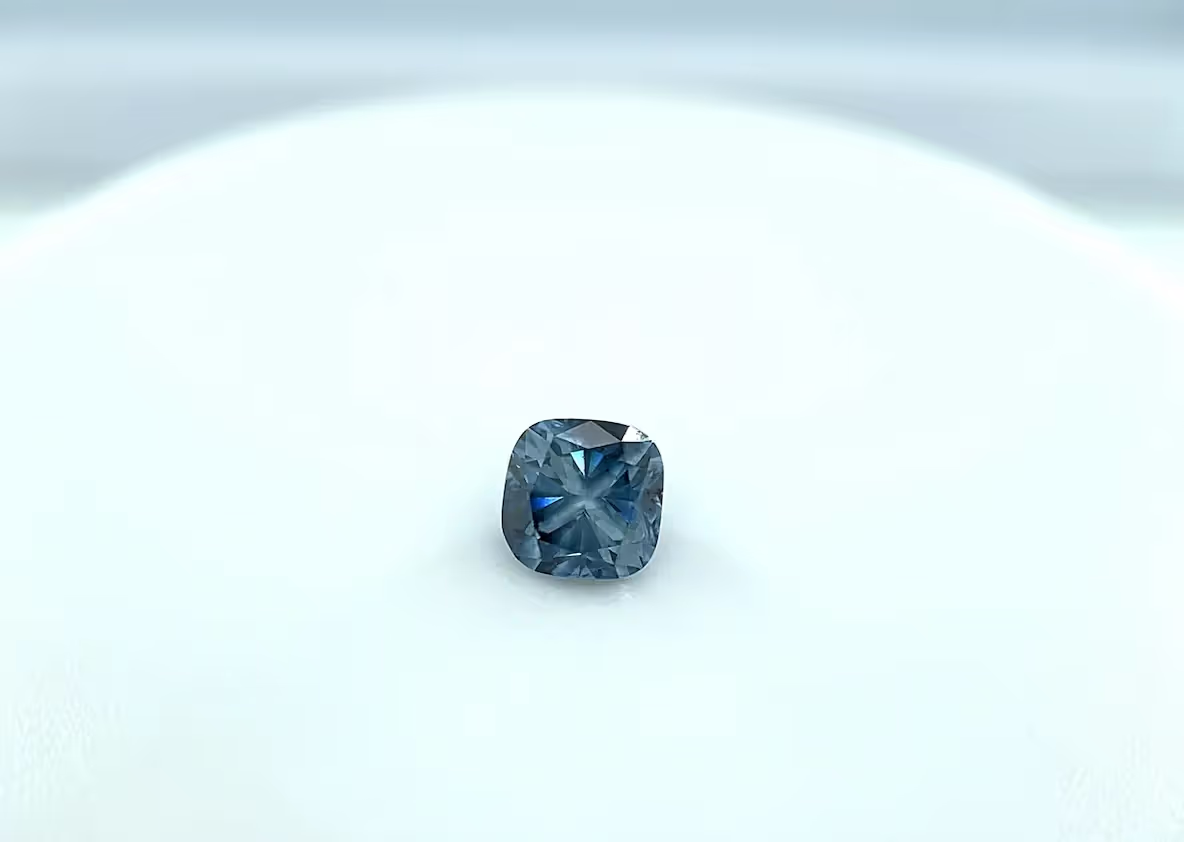
Natural diamonds take an incredible one to three billion years to form deep within the Earth, making them one of nature’s rarest treasures. But rarity isn’t just about how they’re made; it’s also about their unique characteristics. Over 98% of all natural diamonds contain nitrogen, which often gives them a slight yellow tint. Truly colorless diamonds are exceptionally rare, as are naturally vibrant “fancy colored” diamonds, which get their beautiful hues from trace elements trapped during their formation—boron for blue, for example. This is what makes every memorial diamond so special. The carbon from your loved one’s ashes or hair has a unique elemental signature, resulting in a color that is entirely their own, from colorless to a deep, rich blue. It’s a beautiful reflection of a one-of-a-kind life.
The Four C’s
The four C’s refer to four categories that determine a diamond’s quality. This grading report was created by the Gemological Institute of America, and it helps jewelers and customers determine a diamond’s value.
Color
A diamond’s color—or lack thereof—can be an easy way to evaluate quality even with the naked eye, although a trained professional will be able to notice color differences in diamonds that an untrained eye will not. A completely colorless diamond is considered the highest-quality, although there are exceptions to this rule.
While we tend to think of diamonds as clear, colorless stones, there are natural diamonds in every color of the rainbow. For these colored diamonds, richer color signifies better quality.
Lab grown diamonds can be colored to your preference or left colorless.
Clarity
This category looks for inclusions and blemishes. Inclusions refer to internal imperfections, whereas blemishes refer to external imperfections. A high-value diamond will have little to no inclusions or blemishes.
Eterneva performs a quality assesment on each of our diamonds to identify the placement of any inclusions before cutting. This allows us to tailor the diamond to your preferred shape and size without any visible imperfections.
The clarity scale has six categories: flawless, internally flawless, very, very slightly included, very slightly included, slightly included, and included. A flawless diamond will be of the highest quality, while an included diamond will be of the lowest quality.
Inclusions: A Diamond's Unique Fingerprint
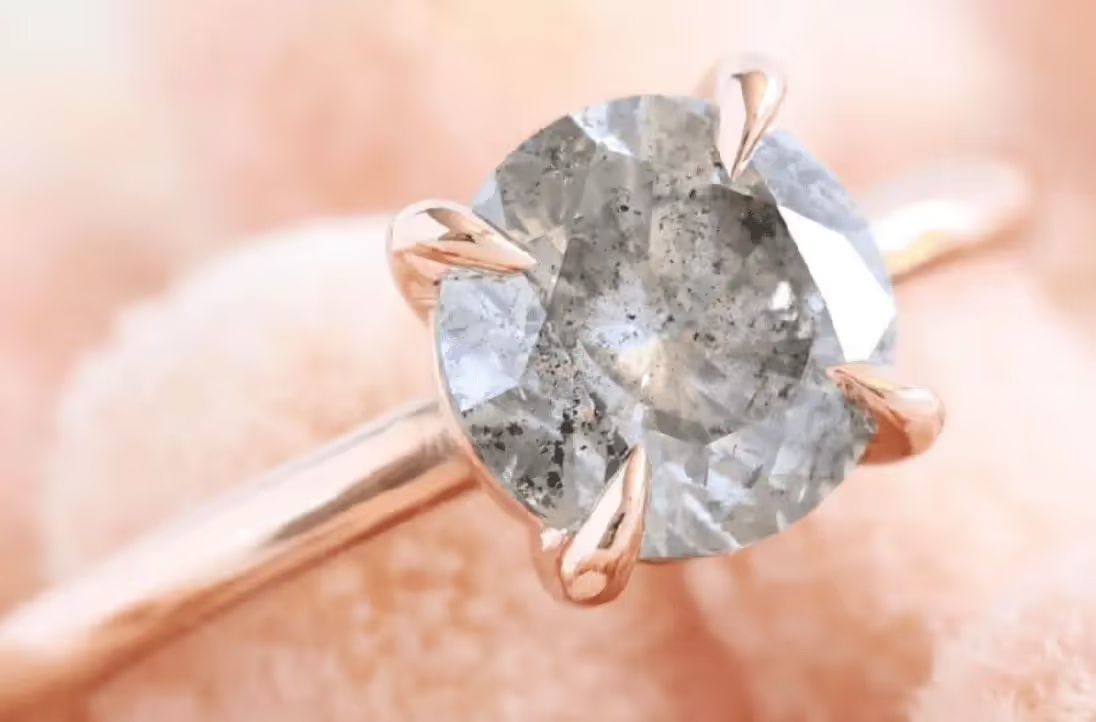
Think of inclusions as a diamond's unique birthmarks. These are tiny, natural characteristics that form inside the stone during its creation process. While the word "imperfection" might sound negative, these inclusions are often microscopic and invisible to the naked eye. They don't typically affect the diamond's sparkle, but they do give each diamond its own distinct character. Just as no two fingerprints are the same, no two diamonds have the exact same pattern of inclusions. This inherent uniqueness is part of what makes every single diamond a one-of-a-kind treasure, a small universe of features that tells the story of its formation.
Cut
A diamond’s cut is commonly misinterpreted as its shape; common shapes include round, oval, and rectangular. A diamond’s cut actually refers to how its facets—or sides—interact with light. There are three visual effects present in a high-quality diamond: brightness, fire, and scintillation.
Brightness is the reflection of internal and external white light, while fire defines the scattering of that white light into every color of the rainbow. Lastly, scintillation refers to how much sparkle the diamond produces. This grading category also considers the diamond’s craftsmanship.
Carat
A carat is a unit of measurement used for gems. This category determines a diamond’s value based on its mass. Typically, higher carats create higher prices. This standard exists because higher weighing diamonds are rarer.
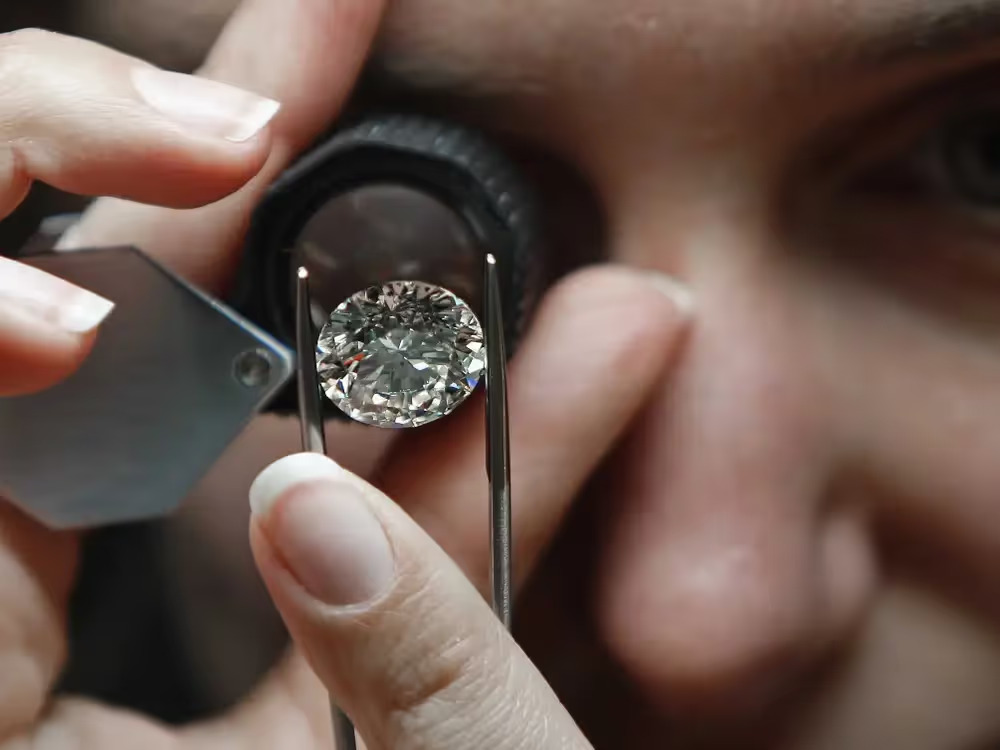
Even if we know the 4 C’s, diamond grading is best left to the professionals. Jewelers undergo extensive training and use specialized instruments to provide accurate grading reports. If you choose, Eterneva diamonds can be certified by independent, expert gemologists through IGI USA.
Measuring Carats in Points
To get more precise with a diamond's weight, carats are broken down into "points." It’s a simple system where one carat equals 100 points—think of points as the cents to a carat's dollar. This means a diamond weighing 0.75 carats is the same as a 75-point diamond. While we often connect carat with a diamond's physical size, it’s technically a unit of mass. Because larger diamonds are rarer and take more to create in a lab, a higher carat weight usually means a higher price. Knowing this can help you explore different diamond sizes and find the perfect one to honor the memory of your loved one.
Understanding Diamond Classifications
Beyond the four C’s, diamonds are also sorted into different classifications based on their origin, color, and chemical makeup. Understanding these categories can give you a deeper appreciation for the stone you choose and help you understand what makes it unique. Some classifications are based on appearance, while others are rooted in pure science.
Common Diamond Categories
When you’re shopping for a diamond, you’ll likely encounter a few common terms that describe how the diamond got its final look. These categories are straightforward and mostly deal with a diamond’s appearance, whether it was enhanced by technology or celebrated for its natural, vibrant hue. It’s a great starting point for understanding the variety you’ll see in a jeweler’s case.
Treated Diamonds
Treated diamonds are natural diamonds that have been altered in a lab to improve their appearance. Think of it as a cosmetic touch-up for a gemstone. Processes like heat treatment can enhance a diamond’s color, while fracture filling can make tiny internal cracks less visible, improving its clarity. These enhancements make the diamond more visually appealing, but it’s important for sellers to disclose these treatments.
Fancy-Colored Diamonds
While many people seek out colorless diamonds, some of the most stunning gems are prized for their vibrant hues. Fancy-colored diamonds are natural or lab-grown diamonds with strong, beautiful colors like yellow, pink, blue, or even red. The more intense and saturated the color, the more valuable the diamond. At Eterneva, you can choose a color that best represents your loved one, from a warm yellow to a deep blue, which you can explore in our gallery of settings.
Scientific Diamond Types
On a more technical level, scientists classify diamonds based on their chemical impurities. It might sound complicated, but it really comes down to one key element: nitrogen. The presence—or absence—of nitrogen atoms within the diamond’s carbon structure determines its scientific type. This classification reveals a lot about a diamond’s rarity and purity at a microscopic level.
Type I Diamonds
Type I diamonds are the most common type found in nature, making up about 98% of all mined diamonds. Their defining characteristic is that they contain detectable amounts of nitrogen atoms. Most of the diamonds you see in jewelry stores are Type Ia, where nitrogen atoms are clustered together. A much rarer subtype, Type Ib, has scattered, single nitrogen atoms and makes up less than 0.1% of natural diamonds.
Type II Diamonds
Type II diamonds are the opposite—they contain no measurable nitrogen impurities, making them chemically very pure. This purity is what makes them so rare and sought-after. Type IIa diamonds are considered the most chemically pure of all diamonds and are often completely colorless. Type IIb diamonds, which are even rarer, contain boron, which can give them a beautiful blue or gray color. Their incredible purity places them in a class of their own.
Lab-Grown Diamonds
Lab-grown diamonds, also known as cultured or synthetic diamonds, are not imitations—they are real diamonds. They have the exact same physical, chemical, and optical properties as diamonds that are mined from the earth. The only difference is their origin. Instead of forming over billions of years deep within the Earth, they are created in a controlled laboratory environment using advanced technology that replicates natural diamond-forming conditions.
The Eterneva Difference: Creating Pure Carbon Diamonds
At Eterneva, we create lab-grown diamonds with a truly personal beginning. We start with the carbon from a loved one’s ashes or hair, which becomes the foundation for a one-of-a-kind memorial diamond. The first step in our seven-step process is to purify these carbon elements, removing everything else to isolate the pure carbon that will form the diamond. This purification results in a diamond that is chemically pure, just like the rare and coveted Type IIa natural diamonds. It’s a beautiful way to create a tribute that is as pure and unique as the life it represents.
Beauty Comes in All Shapes and Sizes
There are several diamond shapes, each with unique characteristics and qualities. These shapes can evoke different memories, reflect trends throughout the decades, and even affect how your fingers look when wearing a ring.
The most common diamond shapes include round, rectangular, square, marquise, oval, and pear.
Round
Round diamonds are a common choice for engagement rings and earrings. They reflect light beautifully, and they’re extremely versatile in fashion. When looking for a round diamond, be sure to check for symmetry, sparkle, and how the diamond reflects light.
Rectangular
Rectangular diamonds have a vintage yet timeless style. Known for their elongated shape, rectangular diamonds come in three different variations: emerald cut, cushion cut, and radiant cut.
Emerald-cut diamonds have clean, sharp edges, while cushion-shaped diamonds have curved sides and corners. Radiant cut diamonds are a newer addition to the category. Introduced in 1977, radiant cut diamonds come in either a rectangular or square shape and have cropped corners.
Square
Square diamonds are a modern, sophisticated diamond shape. When purchasing square diamonds, it is important to look for symmetry and balance.
Square diamonds come in two variations, known as the princess cut and the Asscher cut. Princess cut diamonds will have more sparkle and scintillation, and Asscher cut diamonds will look more like an octagon.
Marquise
Marquise diamonds look similar to oval diamonds. However, marquise diamonds have pointed edges, making them look like an open mouth. When evaluating marquise diamonds, look for symmetrical, balanced shapes that aren’t too short or too long.
Oval
Oval diamonds are a great choice for anyone who wants their diamond to appear larger. Unlike its cousin the marquise diamond, oval diamonds are far less likely to chip due to their rounded edges. Oval-shaped diamonds have a beautiful fire, scattering white light into every color of the rainbow.
Pear
Pear-shaped diamonds are a happy medium between round and marquise shapes. Pear-shaped diamonds look like a teardrop, and they’re typically set in a V-shaped prong. When looking at pear-shaped diamonds, look at prong placement and proportion.
Regardless of shape, it is important that the diamond you purchase is well-cut, symmetrical, and proportionate.
Endless Choices
It may seem as though there are endless possibilities when purchasing or growing a diamond—and there are! Be sure to purchase from a reputable seller and ask as many questions as you need.
Each choice is an opportunity to personalize your diamond and create a piece of jewelry that speaks to your loved one and their essence. Especially for memorial diamonds, the shape, color, and setting of your diamond are an opportunity to honor your loved ones and their remarkable lives.
Sources
The GIA Guide to Diamond Engagement Ring Shapes. Explore Diamond Shapes for Engagement Rings | 4Cs of Diamond Quality by GIA
History of Diamonds | Cape Town Diamond Museum
The sparkling rise of the lab-grown diamond | BBC
Frequently Asked Questions
Are lab-grown memorial diamonds considered “real” diamonds? Yes, absolutely. Lab-grown diamonds are physically and chemically identical to diamonds formed in the earth. They have the same hardness, brilliance, and composition. The only difference is their origin story. Instead of being mined, a memorial diamond is grown in a lab using the specific carbon from your loved one’s ashes or hair, making it a true diamond with an incredibly personal beginning.
Why do memorial diamonds come in different colors? The final color of a memorial diamond, which can range from colorless to a deep blue, is determined by the unique chemical elements present in your loved one's carbon. Just as trace elements in the earth give natural diamonds their rare colors, the specific elements from your loved one create a hue that is entirely unique to them. It’s a beautiful and authentic reflection of the individual they were.
How do I choose the right shape and cut for a memorial diamond? Choosing a shape is a wonderful way to personalize this tribute. Think about the person or pet you are honoring. A classic round cut might reflect a timeless personality, while a more modern princess or radiant cut could represent a bold spirit. The shape you choose can be a reflection of their style or your shared memories, making the final piece of jewelry even more meaningful.
Can I still use the 4 C’s to understand the quality of my memorial diamond? Of course. The four C’s (cut, color, clarity, and carat) are the universal standard for grading any diamond, whether it’s mined or grown in a lab. Your memorial diamond is a high-quality gemstone that can be evaluated using this same system. We focus on creating a beautiful cut to maximize its sparkle and can have it independently certified, so you know its exact quality.
What makes a memorial diamond different from other lab-grown diamonds? While all lab-grown diamonds share a similar creation process, a memorial diamond is fundamentally different because of its source. It is grown from the actual carbon of your loved one or pet. This isn't just a symbolic gesture; their physical essence is the core of the diamond's creation, transforming a personal connection into a timeless heirloom that you can hold forever.
Key Takeaways
- A diamond's origin tells a story: Understanding the difference between mined and lab-grown diamonds is key. Lab-grown diamonds provide a transparent, ethical, and deeply personal option, allowing you to create a meaningful tribute from the carbon of a loved one.
- Use the Four C's as your guide: A diamond's quality is determined by its Color, Clarity, Cut, and Carat. Knowing these fundamentals helps you appreciate the craftsmanship and unique characteristics of any diamond, ensuring you choose a stone with brilliant quality.
- Personalize your tribute with shape and color: The shape, cut, and color of a diamond are more than just design details; they are ways to honor a unique personality. Each choice helps you craft a piece of jewelry that truly reflects the spirit and story of the life it represents.